Following proven, smart borrower tips ensures that a short-term cash advance remains a one-time financial bridge rather than a recurring monthly expense. Because single-cycle payday loans deduct the full principal and finance charge on your very next pay date, disciplined preparation before you sign—and proactive checking account management before maturity—protects you from bank overdraft penalties and rollover fees.
Five Actionable Safeguards for Every Short-Term Borrower
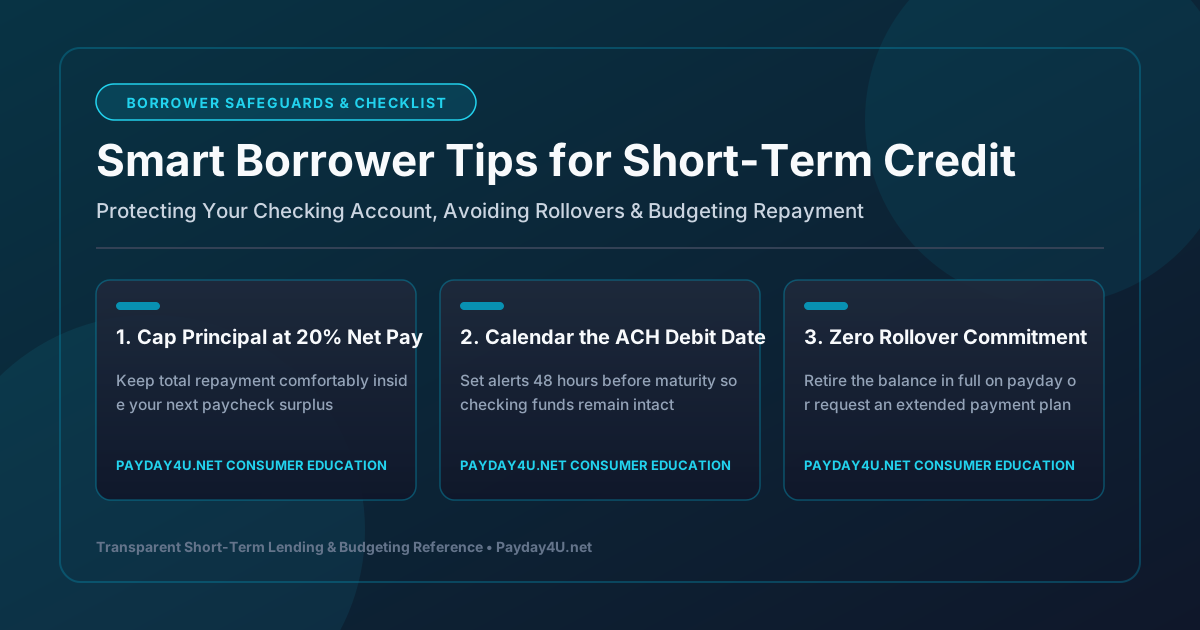
1. Apply the 20% Net-Paycheck Ceiling Rule
Never borrow an amount whose total payoff (principal plus finance fee) exceeds 20% of your single net paycheck. For example, if your bi-weekly take-home pay is $1,400 after taxes, your total payday repayment should never exceed $280 ($240 principal plus a $36 fee). Keeping the deduction within your natural paycheck surplus ensures you can still pay rent, utilities, and groceries after the loan clears.
2. Deal Directly With State-Licensed Lenders and Transparent Portals
Before entering your Social Security number or checking account routing number online, verify that the platform uses 256-bit HTTPS encryption, publishes a clear Privacy Policy explaining how your inquiry is shared, and connects you only with lenders licensed in your state. Never pay an upfront "application fee" or send prepaid debit cards to anyone promising guaranteed loan approval.
3. Compare Payday Advance Costs Against Community Alternatives
| Safeguard Practice | Unprepared Borrower Mistake | Smart Borrower Action Plan | Direct Dollar Savings |
|---|---|---|---|
| Principal Sizing | Accepting maximum $500 offer when only $200 is needed | Borrowing exact $200 invoice amount | Saves $45–$60 in unnecessary finance fees |
| Maturity Preparation | Forgetting scheduled ACH debit date and overdrawing bank | Setting 48-hour alert and verifying balance before payday | Saves $35 bank NSF fee + $25 returned item fee |
| Payoff Execution | Paying fee-only rollover for 3 consecutive pay cycles | Paying full balance on Day 14 or requesting a $0-fee EPP | Saves $90–$180 in repeated rollover charges |
| Alternative Check | Borrowing before calling utility or medical billing desk | Requesting a 14-day utility extension or Credit Union PAL | Saves up to 90% of short-term financing costs |
4. Set a 48-Hour Pre-Debit Checking Account Alert
Automated Clearing House (ACH) repayment debits are typically transmitted early on the morning of your scheduled maturity date. Set a smartphone reminder 48 hours prior to verify that your employer direct deposit is on schedule and that no unexpected automatic subscriptions will dip your balance below the loan payoff amount.
5. Request an Extended Payment Plan Early If Hardship Strikes
If an unexpected reduction in work hours prevents you from retiring the full balance on maturity day, never take out a second loan to pay off the first. Instead, contact the lender at least one business day before maturity to request a state-mandated or CFSA-compliant Extended Payment Plan (EPP), which splits your remaining principal into four manageable paycheck installments at zero extra fee.